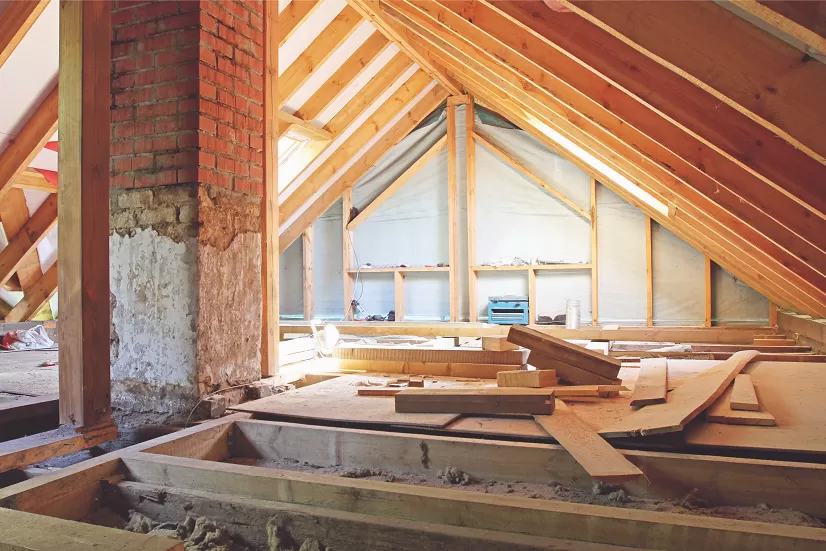
Belleville sits where the Moira River meets the Bay of Quinte. That water brings beautiful views and, in spring and summer, extra humidity. Combine it with the older brick homes of Old East Hill and downtown, plus postwar homes on West Hill, and you have plenty of attics where moisture can build up.
This guide explains how each season affects Belleville attics and what it takes to clear mould and keep it away.
Where the Moisture Comes From
Most attic moisture comes from inside the house, not from outside. Warm, humid indoor air leaks up through ceiling gaps around light fixtures, plumbing stacks, chimneys and the attic hatch. When it hits the cold roof boards, it condenses.
In Belleville, a few local factors make this worse:
- Older homes often have little soffit ventilation and many ceiling leaks
- Waterfront and river-valley humidity keeps attic air damp in warmer months
- Settled insulation in postwar homes lets more heat escape
- Bathroom fans in older renovations were often vented into the attic
Winter
Cold nights turn escaping moisture into frost on the roof boards. Ice dams along the eaves and icicles over the same windows every year are signs of heat loss into the attic.
Spring
Frost melts into the sheathing and insulation. Belleville homeowners often see brown stains on upstairs ceilings and notice a musty smell. Older homes may also show leaks around chimney flashing.
Summer
Humid air near the bay and river can sit in a poorly ventilated attic for days. Attic AC ducts that aren’t sealed and insulated can sweat and drip onto insulation. Upstairs rooms that are hard to cool point to an attic that isn’t venting properly.
Fall
- Clean eavestroughs and downspouts
- Confirm fans vent outdoors
- Clear insulation away from soffits
- Seal and insulate the attic hatch
- Top up thin insulation before winter
How Attic Mould Is Treated
- Assess. Health Canada considers a mould area under about 1 square metre small. A single patch over about 3 square metres is large and should be handled by a qualified professional.
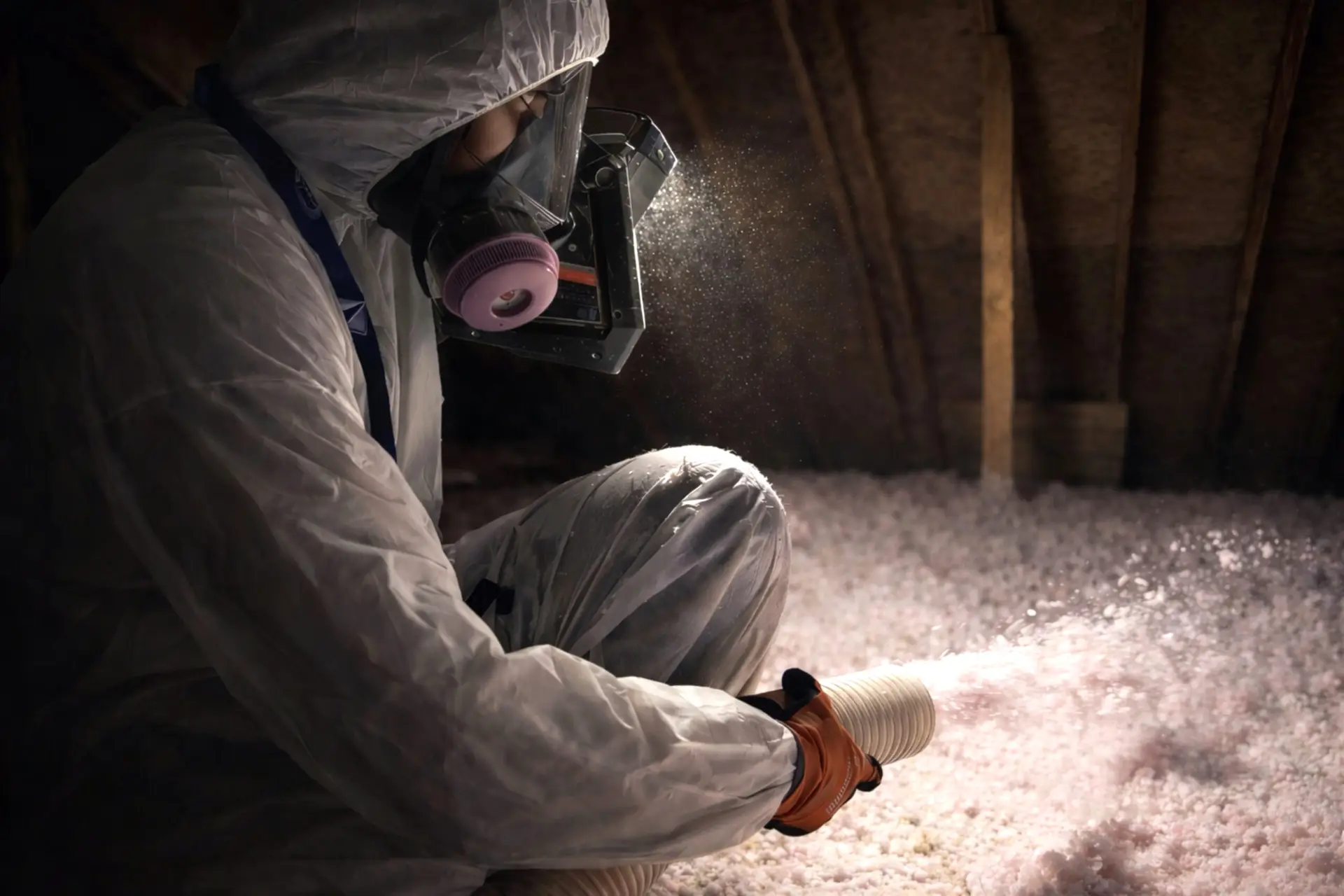
- Remove damaged insulation. Our attic insulation removal service in Belleville clears out wet or contaminated insulation.
- Clean the wood. Surface mould is cleaned and the wood dried. Rotted sheathing may need a roofer.
- Air seal. Seal around fixtures, chimneys, pipes and the hatch. AeroBarrier air sealing seals hidden leaks across the whole home.
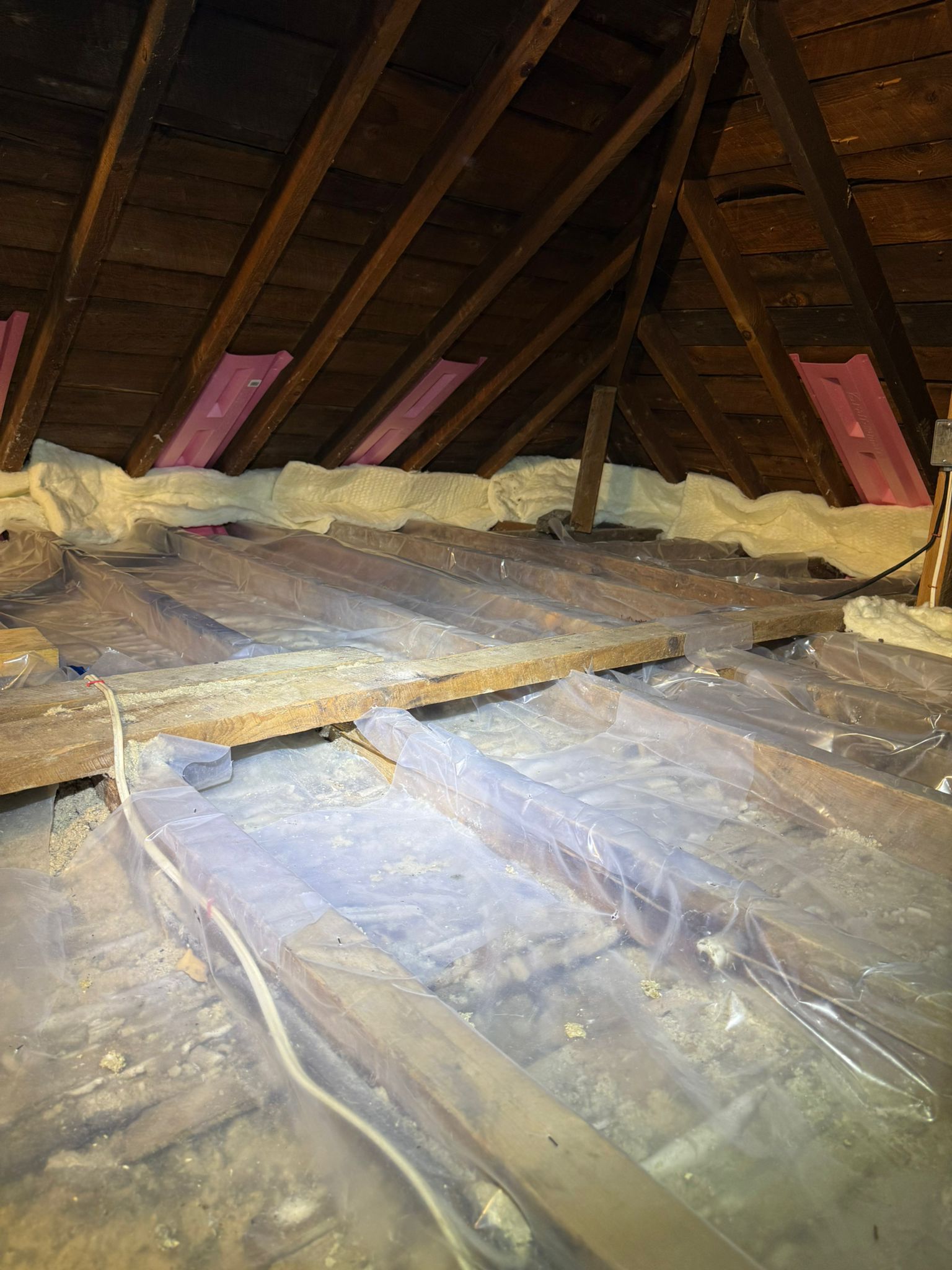
- Ventilate. Install baffles, vent fans outdoors and add a vapour barrier where needed.
- Re-insulate. Cellulose blown-in insulation fills the uneven framing of older homes well. Fibreglass blown-in is another option. For sloped ceilings, 2 lb closed-cell spray foam insulates and air seals together. See all spray foam options in Belleville.
Replace damaged ceilings, and use moisture-resistant drywall in bathrooms.
Prevention for Belleville Homes
- Air seal the attic floor
- Keep soffit-to-roof airflow open
- Vent fans outdoors
- Insulate to current levels (attic insulation in Belleville)
- Run a dehumidifier in damp basements, especially near the water
- Inspect your attic in spring and fall
Upgrades may qualify for rebates. See our home renovation rebate page.
Frequently Asked Questions
Does living near the Bay of Quinte cause attic mould?
It can add humidity, but the main causes are air leaks from the house and poor attic ventilation.
Why does my older brick home have attic mould?
Older homes often have more ceiling leaks and fewer soffit vents, so moist air gets in and stays.
What’s the fastest way to lower attic moisture?
Seal air leaks from the house and make sure bathroom fans vent outside. Those two steps often make the biggest difference.