Belleville sits on the Bay of Quinte, and its housing ranges from 19th-century homes in the historic downtown to post-war bungalows and newer subdivisions in the east and west ends. In winter, many of these homes share a problem homeowners rarely see until spring: warm, moist air leaking into the attic, where it turns to frost on the underside of the roof.
That frost is a sign your home is losing heat, and a warning that the attic needs attention. Here’s how to keep your Belleville home warm without overworking the furnace, and without creating moisture problems.
Attic Frost: What It Tells You
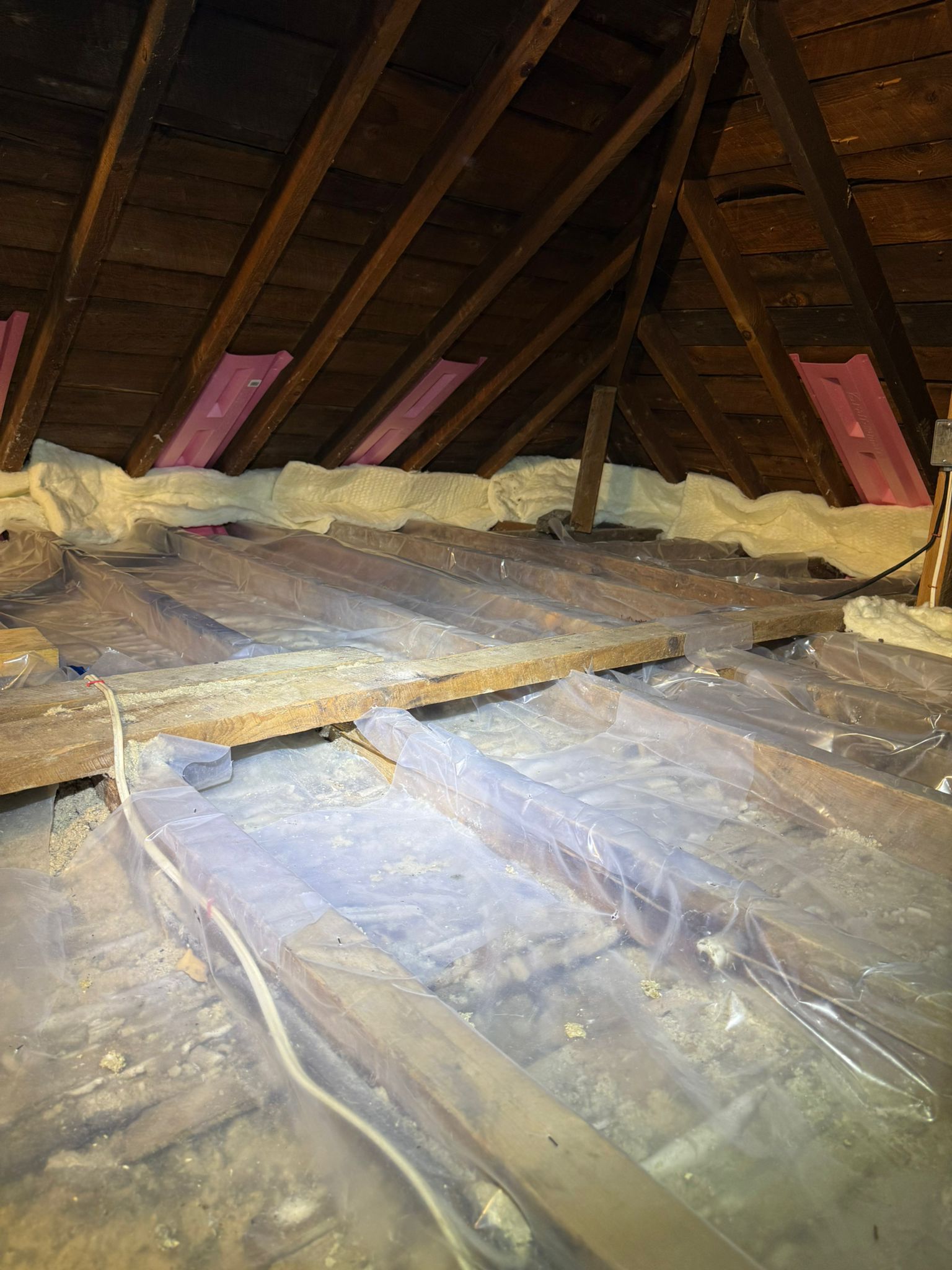
On a cold day, take a flashlight into the attic and look at the nails poking through the roof deck and the underside of the sheathing. White frost there means warm, humid air from your living space is escaping into the attic and freezing. When the weather warms up, that frost melts and drips onto the insulation and ceiling, which can lead to stains, mould and rot.
The same leaks that carry moisture also carry heat. Fixing them makes the house warmer and the attic drier at the same time.
1. Seal the Leaks First
The worst moisture leaks are usually around bathroom exhaust fans (especially ones that vent into the attic instead of outside), pot lights, plumbing stacks and the attic hatch. Make sure every bathroom fan is ducted to the outdoors, and seal gaps between the living space and the attic before adding insulation. For a whole-house approach, AeroBarrier air sealing seals leaks from the inside.
2. Insulate to R-50
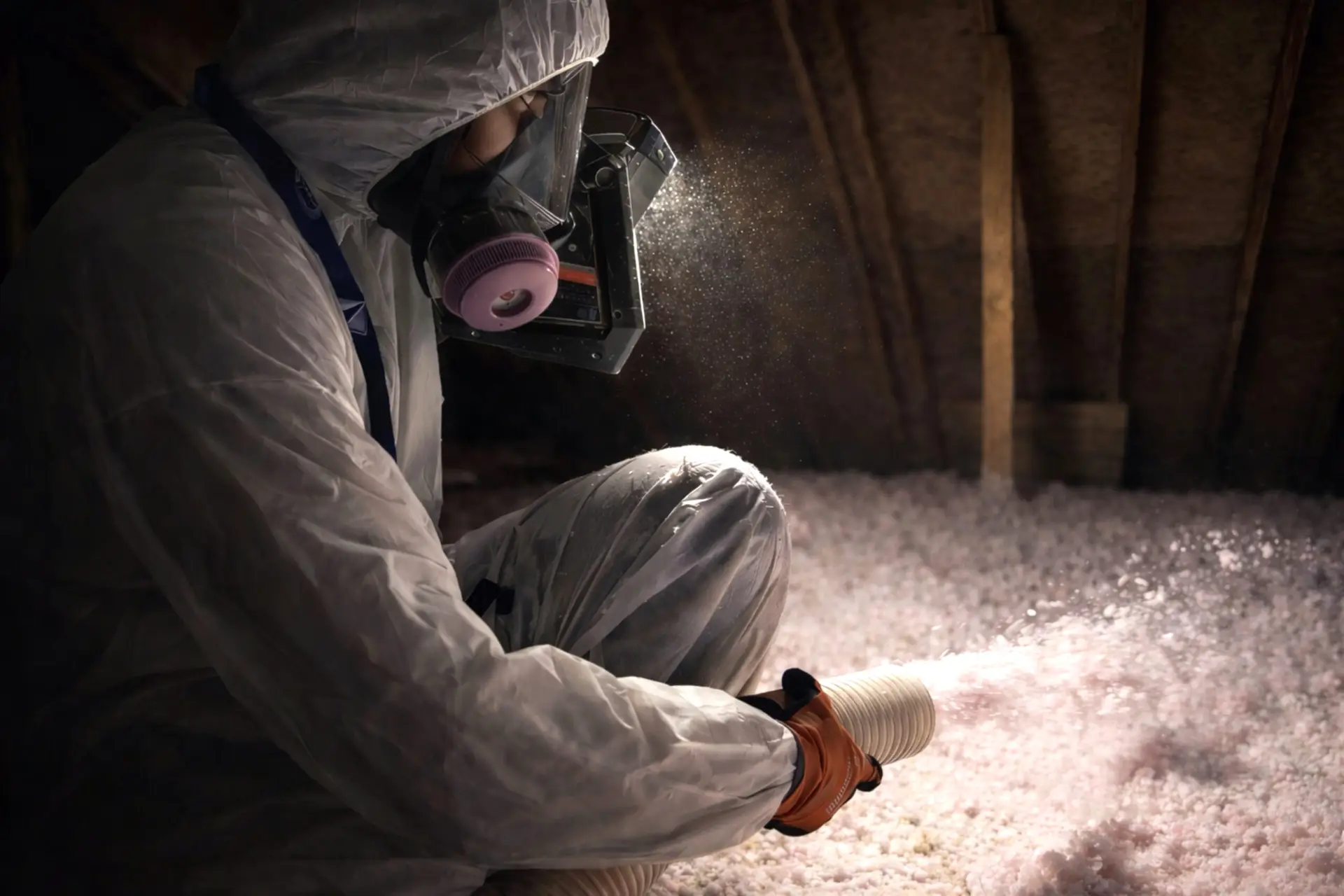
Once the air leaks are sealed, insulation keeps the heat in. Attic insulation in Belleville is usually the biggest single improvement for comfort and furnace runtime. Ontario’s attic rebate program targets R-50: roughly 13 to 15 inches of blown-in cellulose or 17 to 19 inches of blown-in fibreglass.
3. Make Sure the Attic Can Breathe
Ventilation is the other half of a dry attic. Cold outside air should enter at the soffits and leave near the ridge, carrying moisture with it. If insulation is packed against the eaves, that airflow stops. Baffle installation keeps a channel open at every rafter bay.
If frost or leaks have already soaked or stained the insulation, attic insulation removal should come first so you’re not burying a moisture problem.
4. Keep Indoor Humidity in Check
- Run bathroom fans during and after showers.
- Use the range hood when cooking.
- If your windows stream with condensation on cold mornings, your indoor humidity is likely too high for the season. Turn down the humidifier.
- Don’t dry laundry indoors on racks during cold snaps.
5. Other Places Belleville Homes Lose Heat
- Rim joists: 2 lb closed-cell spray foam insulates and air-seals them.
- Older walls: Drill and fill insulation fills hollow wall cavities.
- Room over the garage: Garage ceiling insulation warms the floor.
Belleville Attic Rebate
The Home Renovation Savings attic rebate offers up to $1,250 to bring an attic from R-12 or less up to R-50, with no energy assessment, and up to $1,000 or $800 for attics that start higher. The attic-only rebate must be completed by a participating contractor, and gas-heated homes must be Enbridge Gas customers. The program is extended to November 30, 2026. See our Belleville rebate page.
Frequently Asked Questions
Is frost in my attic normal?
A little frost during extreme cold can happen, but heavy or regular frost means warm, moist air is leaking into the attic. Sealing leaks and improving ventilation fixes it.
Will more insulation cause moisture problems?
Not if air leaks are sealed and ventilation is kept open. Those two steps should always go with an insulation upgrade.
My bathroom fan vents into the attic. Is that a problem?
Yes. Exhaust fans should vent outdoors. Venting into the attic puts warm, moist air exactly where you don’t want it.
Get a Warmer, Drier Attic in Belleville
Pro Insulation Contracting will check your attic for frost, leaks and ventilation, then recommend the right fix. Book a free assessment or call 705-315-8118.