Keeping a house warm is mostly a matter of doing the right jobs at the right time. Leave the attic until January and you are working in the cold with the damage already showing. Start in the fall and most of it is done before the first hard frost.
Here is a month-by-month plan for Belleville homeowners, with attic insulation at the centre of it.
Early fall: look and plan
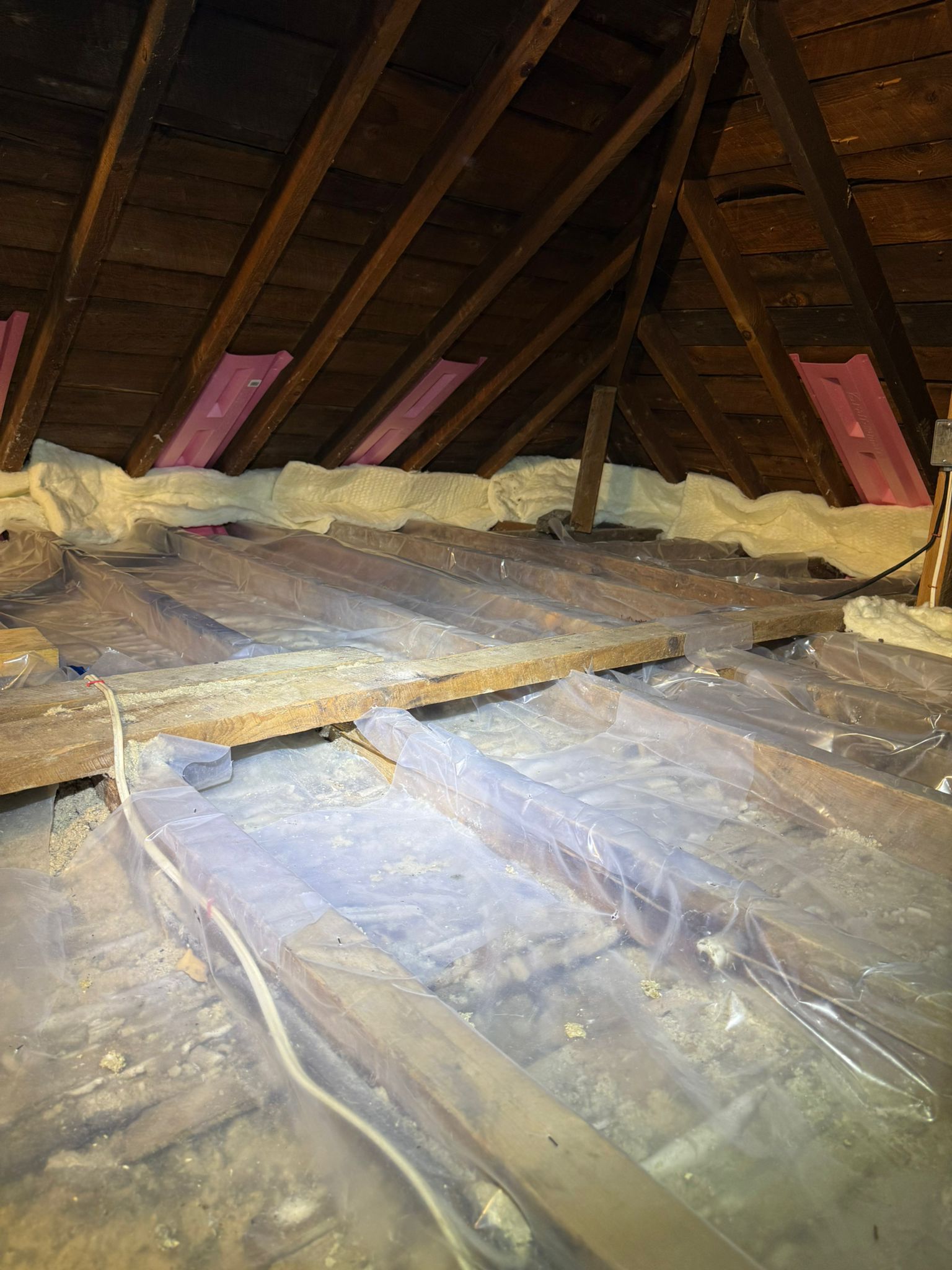
Inspect the attic. Open the hatch on a mild day and check the depth and condition of the insulation. If the joists are showing, or the material looks dark, damp or flattened, make a note. Our guide shows how to tell if your Belleville attic needs more insulation before winter.
Know your house. An older home and a newer one need different approaches, which we cover in two housing eras, two different insulation answers. In older attics, loose grey-brown granules may be vermiculite. Natural Resources Canada advises not disturbing it.
Check rebates before booking anything. Program rules often require steps in a set order. Start with the insulation rebate in Belleville and our energy rebate page.
Mid fall: the attic work
This is the best window for the main job. Crews can work comfortably and you get the benefit all winter.
- Remove damaged insulation. Wet or mouldy material has to go, and the moisture source has to be fixed. See attic mould and insulation removal in Belleville and our removal service.
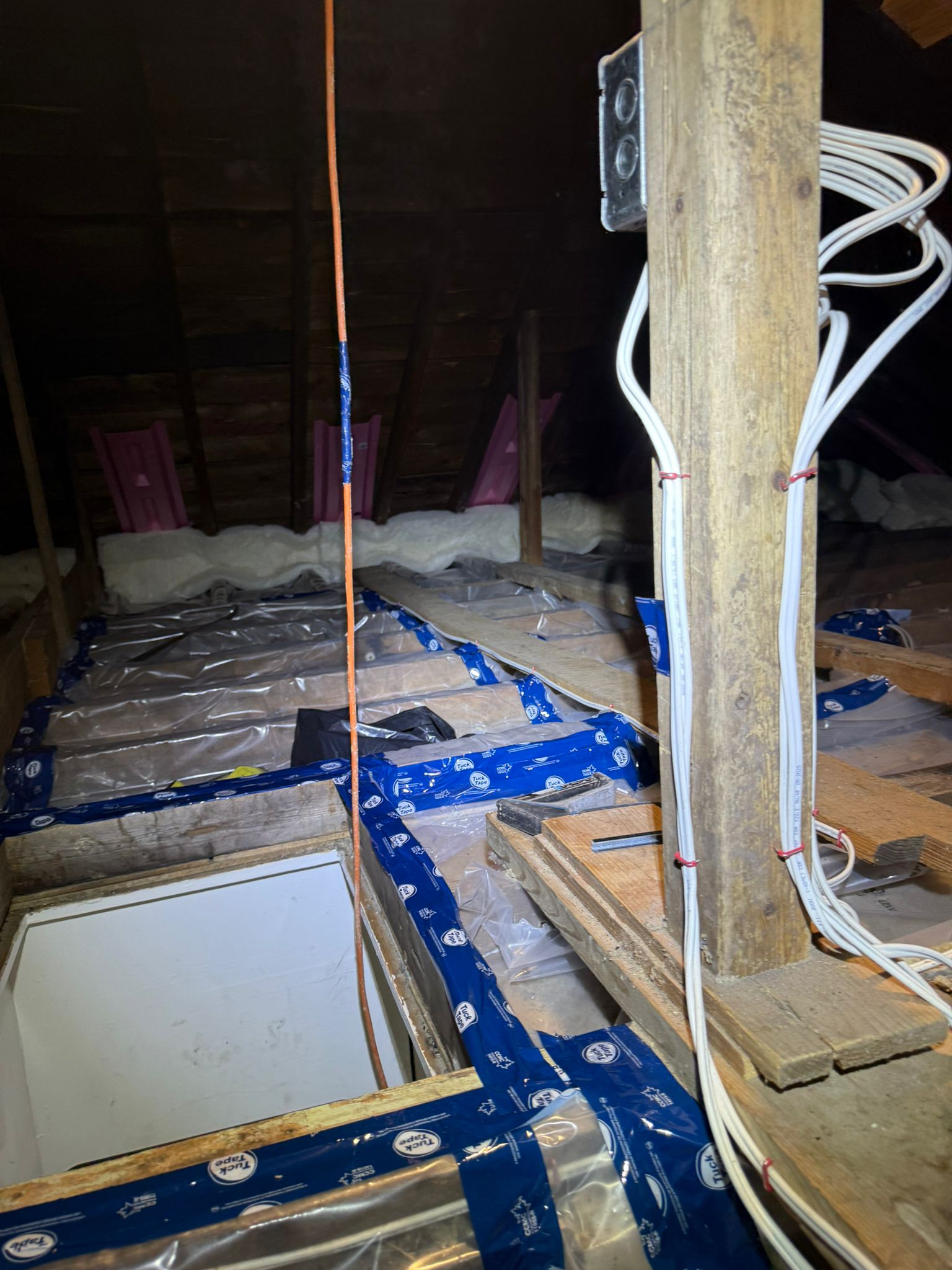
- Air seal the attic floor. Natural Resources Canada’s Roofs and attics guide says leaks at chimneys, vents, pipes and electrical boxes can account for substantial heat loss.
- Install baffles so the soffit vents stay clear. More on baffle installation.
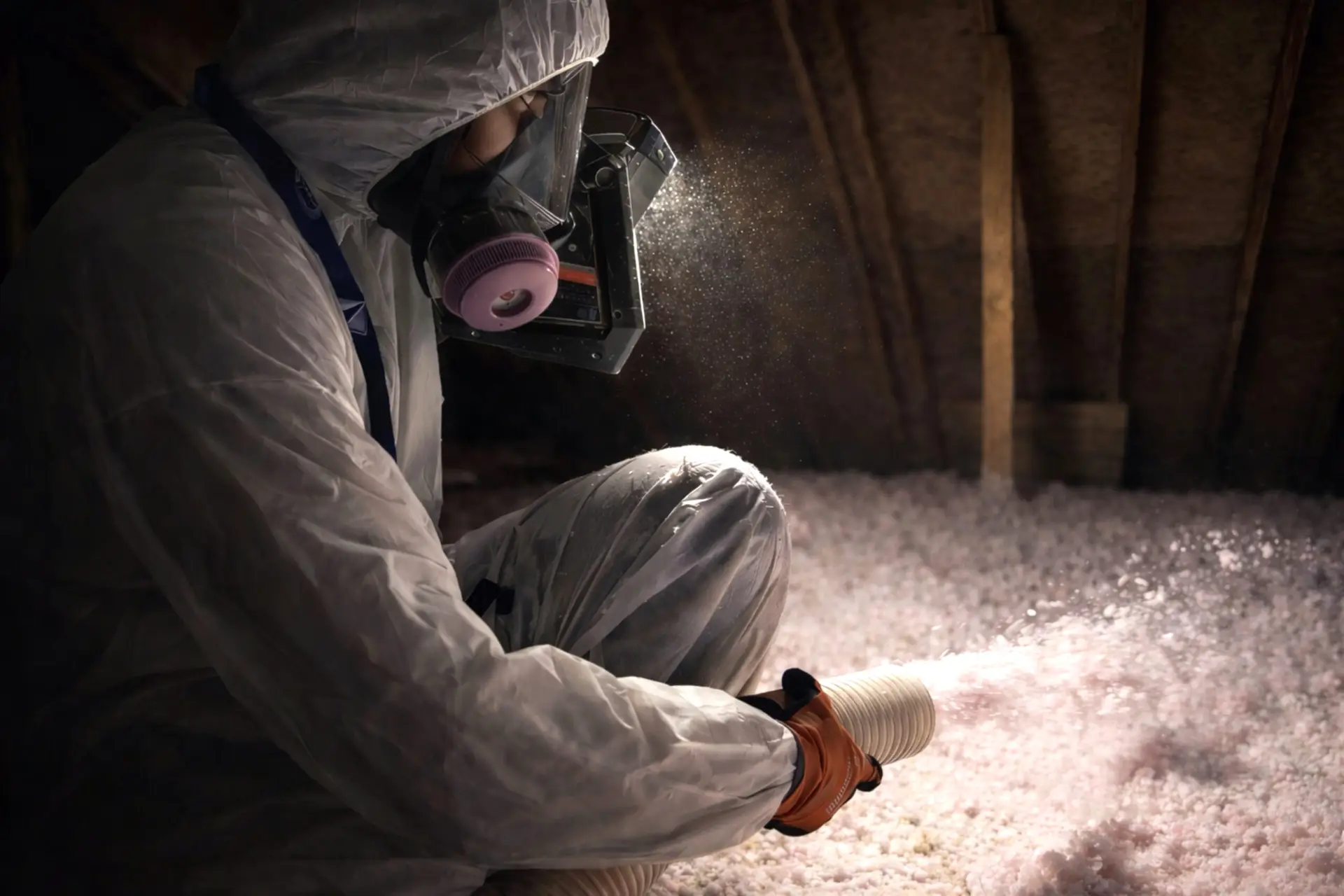
- Top up the insulation with blown-in cellulose or fibreglass through our attic insulation service in Belleville.
We make the case for doing this first in the best-value upgrade for an older home.
Late fall: seal the living space
Before the heating season is in full swing:
- Weatherstrip exterior doors and the attic hatch.
- Caulk around window and door trim.
- Fit door sweeps.
- Replace the furnace filter and clear all registers.
Natural Resources Canada’s materials guide explains the weatherstripping options.
Early winter: watch how the house behaves
The first cold snap and the first snowfall tell you what is left to fix.
- Uneven snow melt or ice at the eaves means heat is still reaching the roof.
- Cold floors point to the basement or rim joist. Natural Resources Canada notes that basements can lose more heat than a typical attic. Spray foam insulation is the usual fix.
- A cold room over the garage calls for garage ceiling insulation.
- Cold exterior walls in an older home suggest empty cavities, which drill and fill insulation can address.
For more on what local winters do to a house, read Belleville’s winters are harder on homes than people realize.
A note for waterfront and seasonal homes
A cottage or seasonal property that is being used year-round needs more than a top-up, because it was never built for winter. See making a waterfront or seasonal home livable year-round.
What the work is worth
The U.S. EPA estimates that air sealing and adding insulation in attics, crawl space floors and basements saves an average of 15% on heating and cooling costs (ENERGY STAR). It is a modelled average for typical U.S. homes, so treat it as a rough guide.
Get on the calendar
Fall schedules fill up. Contact us for an estimate while there is still time before the cold.